01From PHP to Next.js and Supabase
The catalogue moved to a Postgres database on Supabase and its photos and PDFs to Supabase Storage, through a migration script that read the old SQL export and re-uploaded every file. The App Router renders product lists and sheets on the server; one navigation tree drives the URLs, the breadcrumbs and the menu, and a proxy answers 404 for lists that do not exist before the page starts streaming.
02Flagship pages with a story
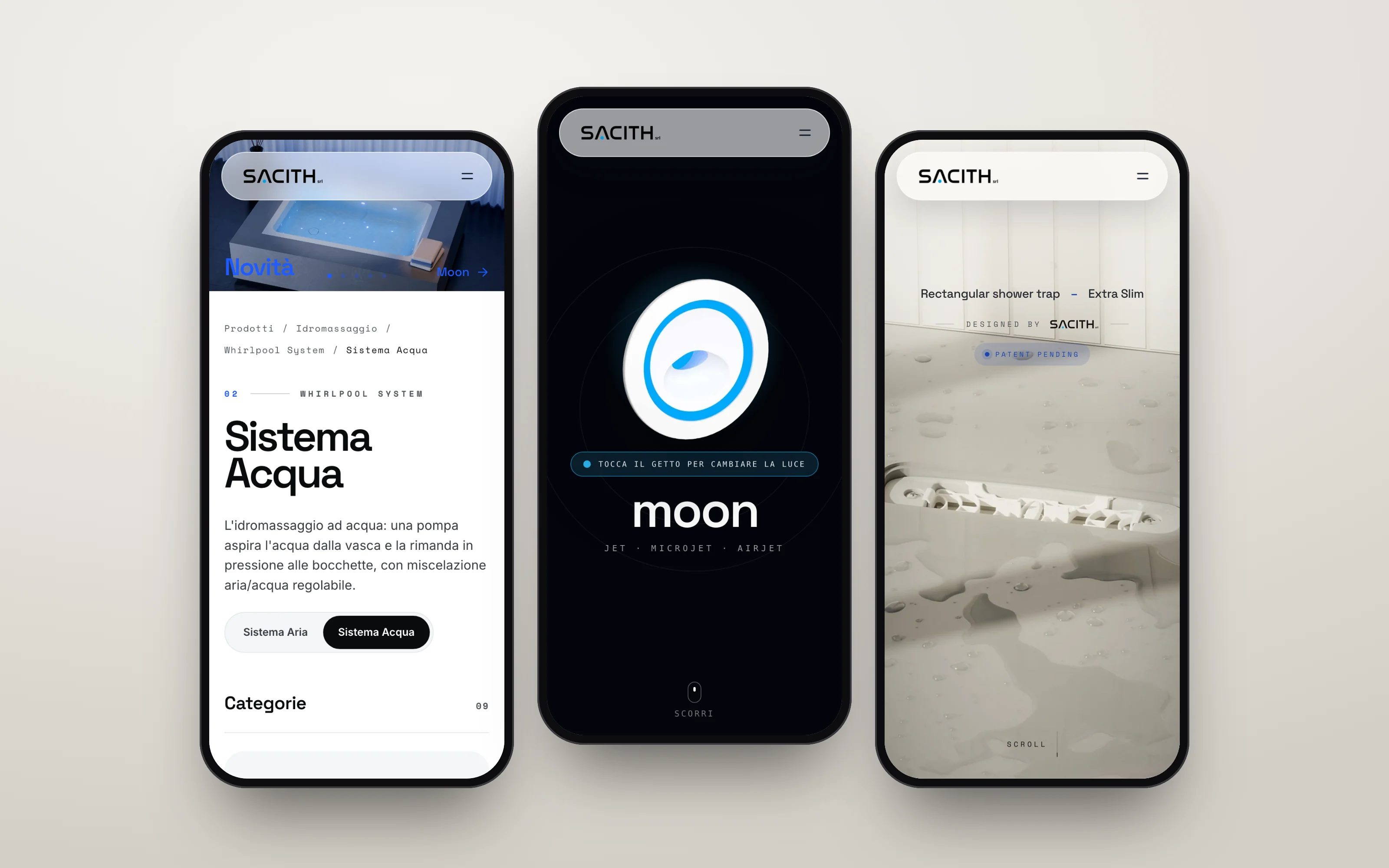
Moon and ESR each got a page designed around the product rather than a template: scroll-driven sections built with GSAP and Framer Motion, the client's renders and exploded views turned into annotated details, and the codes, dimensions and downloads a buyer still needs at the end of the story.
03SEO built into the code
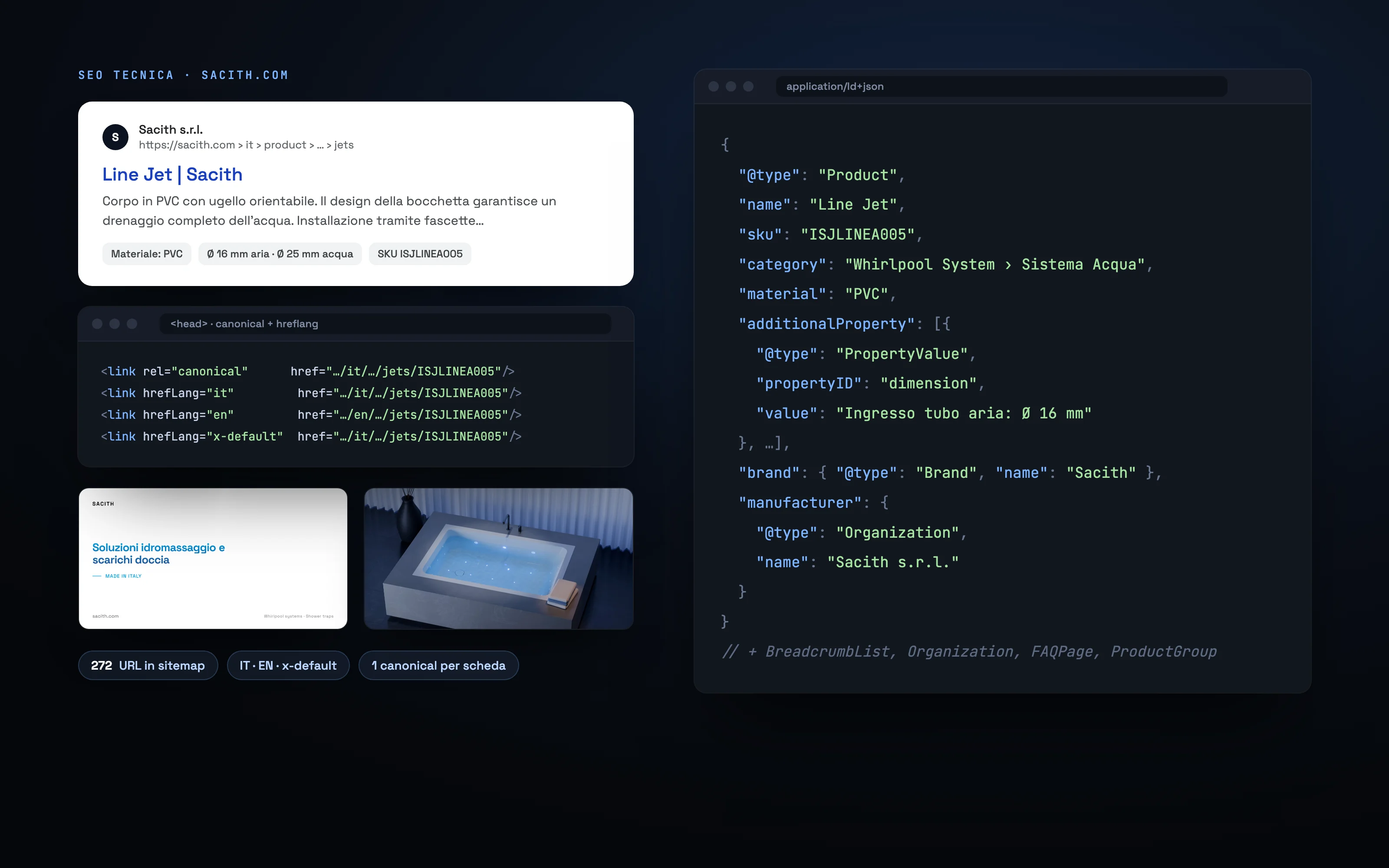
Short legacy routes such as /single-product/ID still work, but point to the long navigation URL as the only canonical. The sitemap is generated from the database with each row's last update where it has one, robots.txt keeps search and filter URLs out and blocks every preview deployment, and every page repeats its full Open Graph and Twitter set so none of them loses its image or locale.
04GEO: a way in for AI engines
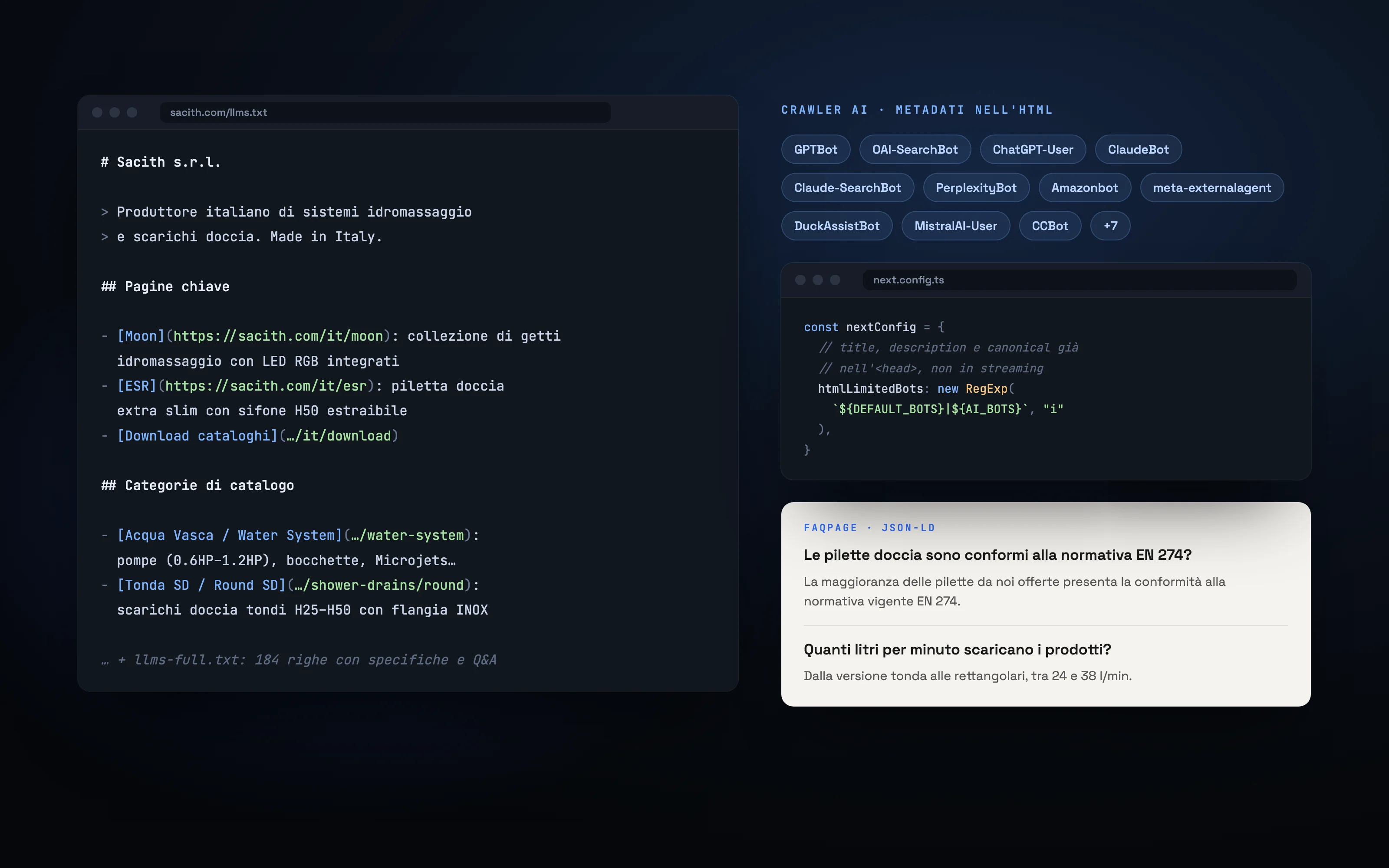
Next.js streams metadata to ordinary browsers, which is faster for people but leaves crawlers that do not run JavaScript without a title or a canonical. I extended its list of HTML-limited bots with the AI crawlers, wrote llms.txt and llms-full.txt by hand, and published the product-list FAQs as FAQPage data, so an assistant asked about EN 274 or drain flow rates finds the answer in the client's own words.
05Working with the client
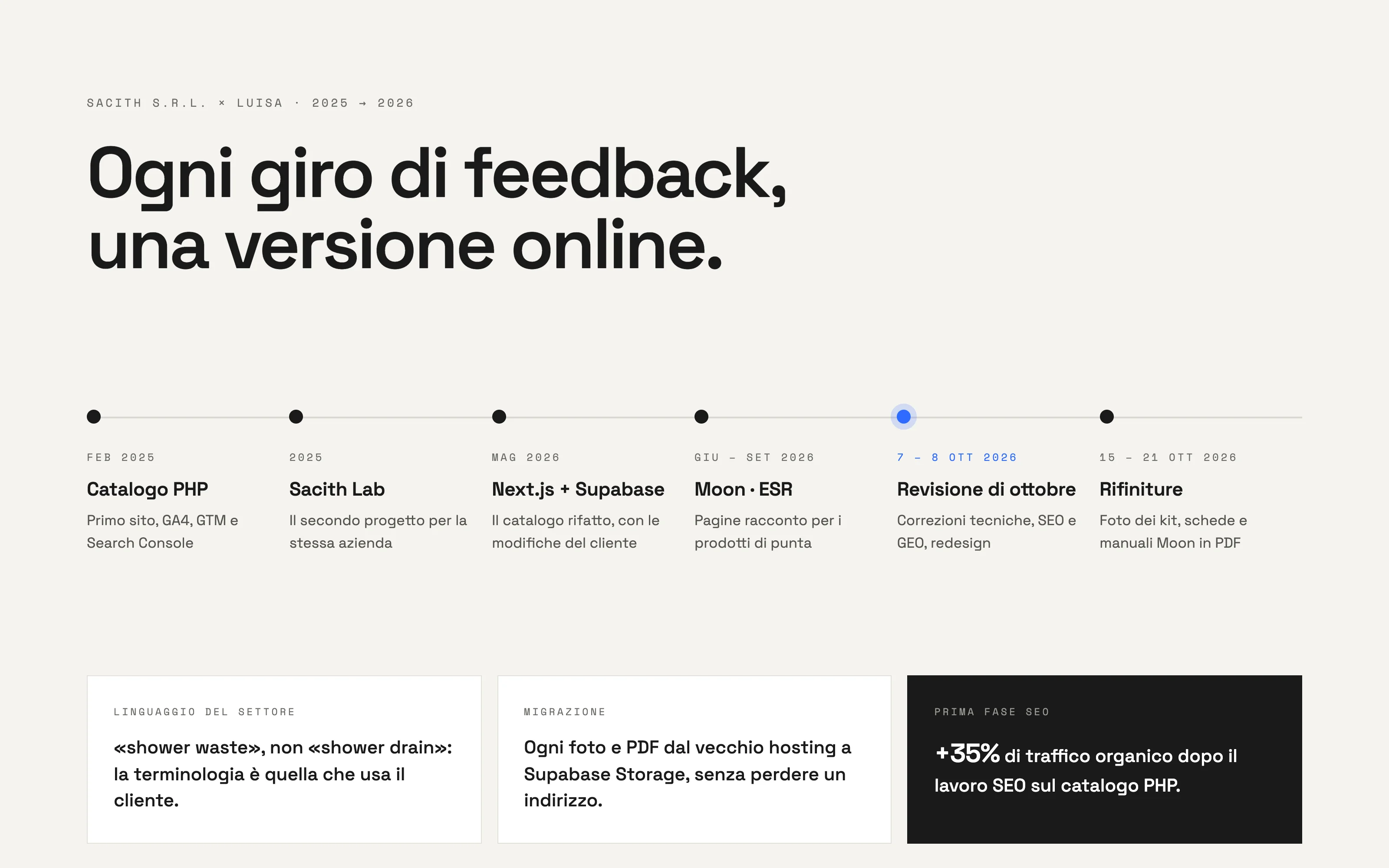
The work runs in rounds: the client sends corrections and new material, I turn each round into a version online, and we review it together. Some requests are about words, like using "shower waste" instead of "shower drain" in English; some are about material, like new renders, datasheets and manuals that replace the old files; all of them are tracked in the history.